
What to pack for Umrah, and what to leave at home
The short answer. Pack light, because you will carry it further than you think and you will bring things back. The three that matter most are unscented soap and toothpaste for ihram, comfortable slip-on shoes with a bag to carry them in, and your medicines in hand luggage with their generic names written down. Leave the scented toiletries, the ironing plans and the third pair of jeans at home.
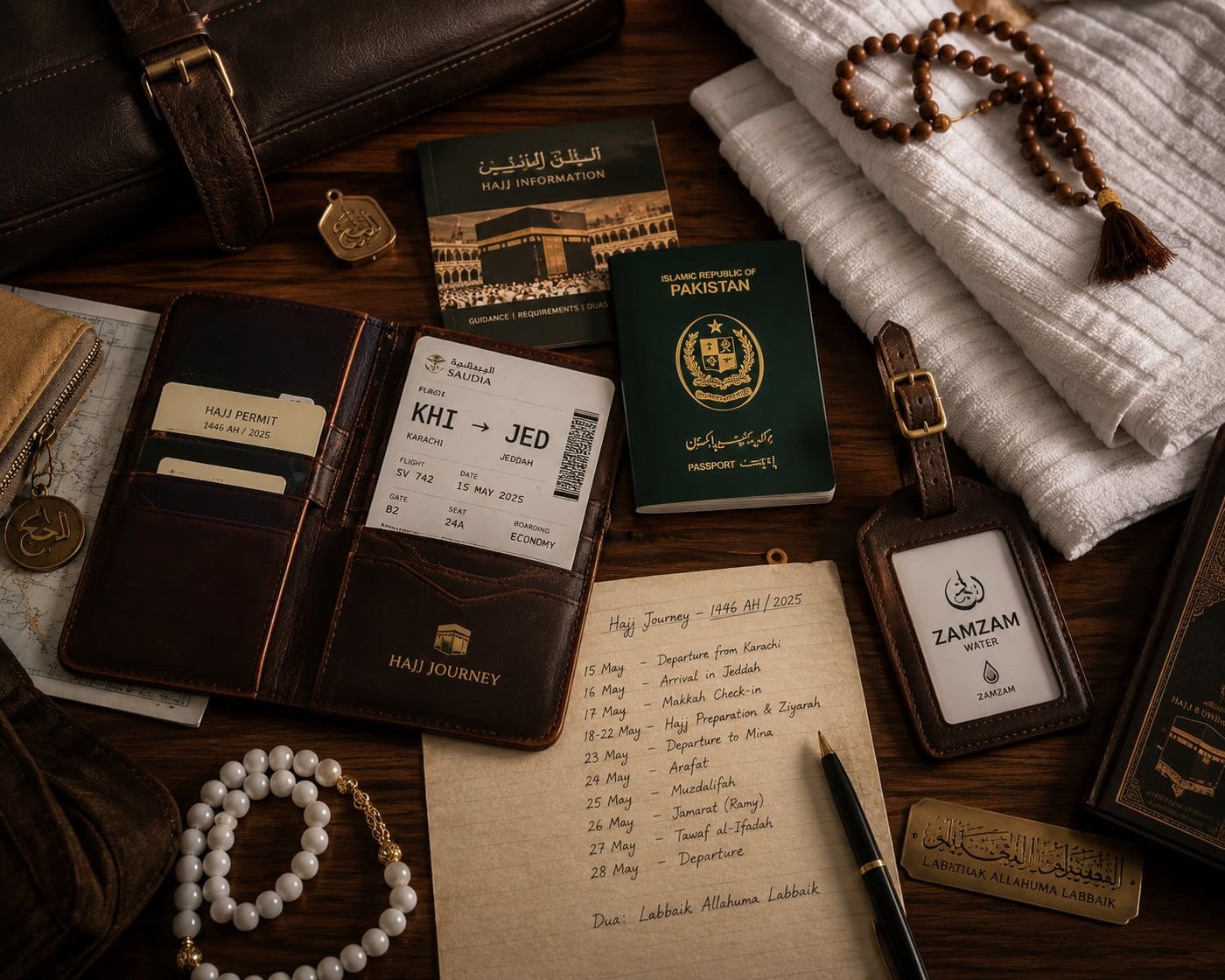
This is not a list copied off another website. It is what we watch families actually use, and what they end up buying again in a shop beside the Haram at four times the price because it was left in Karachi.
It is written for Umrah. Most of it applies to Hajj as well, with more of everything and more patience.
The ihram, and the one mistake everybody makes
For men: two sets of ihram. Not one. One is being washed or is damp or has something spilt on it. Two sets is the single most repeated piece of advice from anybody who has been, and it is still the thing people skip.
An ihram belt with a zip pocket. For your card, a little cash and your room key. The alternative is carrying a wallet in your hand through tawaf.
Unscented soap, unscented toothpaste, unscented shampoo. This is the mistake. Perfume is not permitted in ihram and almost every ordinary soap, toothpaste, deodorant, shampoo and wet wipe is scented. Buy the unscented versions before you fly, at home, calmly, reading the labels. Doing it in a hurry in Makkah is expensive and the choice is worse.
For women: ordinary modest clothing, loose, plain and in light fabric. There is no special garment. Two or three abayas that dry quickly beat five that do not, and dark fabric is much hotter than people expect in the afternoon.
Safety pins, more than you think. They hold everything together and they disappear.
Shoes, which decide your week
You will walk more than you have walked in years, on marble, in heat, and you will take your shoes off and put them on ten times a day.
One pair of genuinely comfortable slip-ons. Broken in already. Not new. Not sandals with buckles you have to bend down for.
A cloth shoe bag. Take your shoes in with you. Shoe racks at the Haram are vast and numbered and they are also where thousands of identical black sandals go to be lost forever. A cheap drawstring bag solves a problem that is genuinely miserable to have.
Socks, several pairs, thin. The marble is hot in the afternoon and cold at night, and you will be barefoot on it either way.
The medical bag, taken seriously
This is the part where we would rather be boring than sorry.
- All your medicines in hand luggage, not in the hold. Bags do get delayed.
- Twice what the trip needs. Delays happen, and Saudi pharmacies will not know
your Pakistani brand names.
- The prescription, and the generic names written down. A pharmacist in Makkah can
help you with paracetamol or metformin. They cannot help you with a brand they have
never heard of.
- A one-page summary of conditions, doses, allergies and blood group, in English,
for anybody older or unwell. A copy in your bag and a copy in theirs.
- Rehydration salts, several sachets. The most useful thing in the bag and the one
nobody packs. Heat plus walking plus not drinking enough is how most people's trip
goes wrong.
- Plasters and blister plasters. See: shoes, marble, ten kilometres a day.
- Throat lozenges. A cough goes round every group, every time. It is the air
conditioning and the crowds.
- Vaseline or a thick unscented cream for feet and lips.
Vaccination certificates are a requirement rather than a packing tip, and the meningococcal one has a ten day rule before arrival, which is why it belongs at the start of your planning and not in your suitcase. We covered that in the Umrah visa from Pakistan.
Documents
- Passport, and photocopies of it, plus a photograph of it on your phone and one
in your email. All three.
- Your visa and hotel confirmations printed. Phones die in queues.
- The hotel's name and address written in Arabic on a card in your pocket. This is
worth more than any app the first time you are lost and tired.
- Your agency's Saudi contact number, not only the Karachi office. Ask for it
before you fly.
- Some Saudi riyals in cash for the small things, plus a card. Do not plan to
change money at the airport.
The things that quietly make it easier
- A small backpack for the Haram: water, shoes, a phone charger, a cap.
- A refillable water bottle. Zamzam is everywhere; carrying a bottle means you
drink more of it.
- A power bank. You will be out for hours and using your phone for directions,
photographs and finding people.
- An umbrella, plain, for the sun. Widely used, does not look odd, and makes a
midday walk possible.
- A cap or a light scarf for the head outside ihram.
- A prayer mat, thin. For the courtyards and for the hotel.
- A pen. For landing cards, and nobody ever has one.
- A universal adapter. Saudi sockets are not all the same as yours.
- Spare glasses, if you need glasses to read.
- A folding bag in your suitcase. You are bringing things back: dates, zamzam,
prayer mats, gifts. Plan the space now rather than buying a bag there.
What to leave at home
- Anything scented, if you are going into ihram. Read the labels rather than
guessing.
- Most of your clothes. Laundry is cheap and quick, hotel rooms are small, and
you will regret the weight at the airport and in the lift.
- Formal shoes and an iron. You will not use either.
- A hair dryer, usually already in the room.
- Valuables and jewellery. Large crowds, small rooms, no need.
- Large quantities of food from home. A few familiar snacks are a comfort; a
suitcase of them is space you will want on the way back.
- A drone, and anything that looks like one. Not worth the conversation.
- Wishful thinking about the weather. Check what the temperature will actually be
in the month you are going and pack for that, not for the month you booked in. We
went through the months in when to go for Umrah.
The one piece of advice underneath all of this
Take half of what you have packed back out of the bag.
Every family we have sent has come home saying they carried too much, and not one has come home saying they wished they had brought more clothes. You are going to walk, queue, sit on floors, take your shoes on and off, and come home with more than you left with. Light is not a style choice on this trip; it is a kindness to yourself.
If you are getting ready to go and want somebody to look over the practical side, including anything about medicines or an older traveller, send us a message on WhatsApp. We have been doing this from Karachi since 1984 and we would rather answer a question now than hear about it afterwards.
Read next: taking elderly parents, and how to read a hotel's distance from the Haram, which is the thing that decides how much walking any of this is for. Our Umrah packages are on the services page.